
Share and like this article
The Film, The Applause, and The Silence That Followed
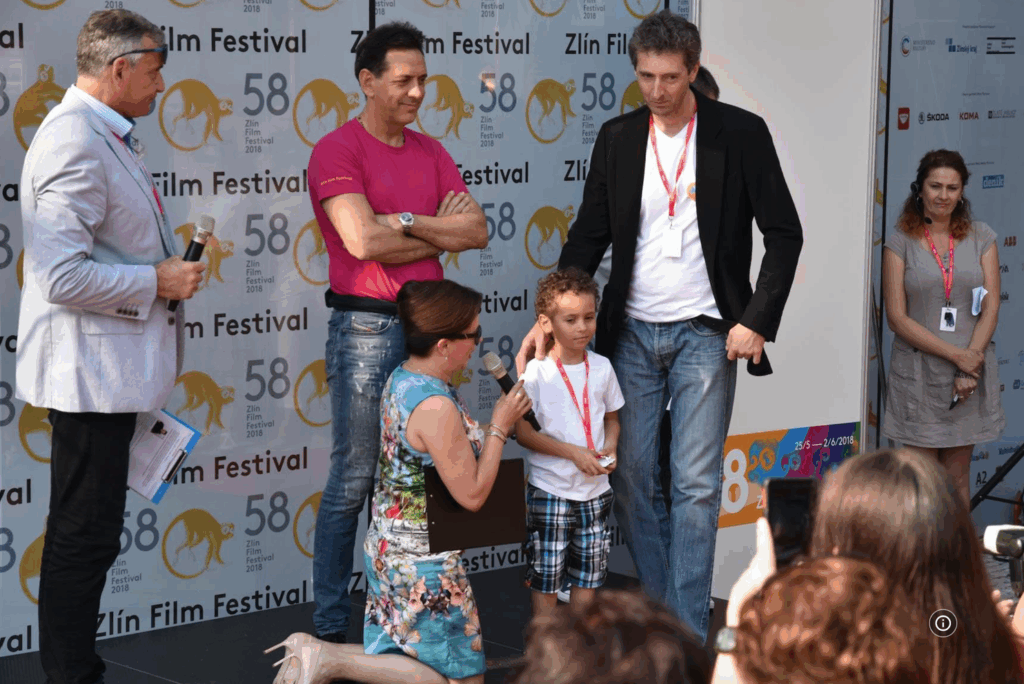
There’s a certain feeling that follows when you give everything to a project. For months, our film “72 Hours in Bangkok” became our entire world. It was our attempt to break the silence surrounding the crisis of missing and trafficked children. Alongside us stood composer and conductor Andrea Morricone, whose music gave emotional depth to the unspoken world of a lost child.
We followed every path expected of those seeking change. Months of press engagement. Appearances on national television and radio. Conversations with the Italian press, the Italian embassy, and even representatives of the German government. We raised awareness, we presented documented realities, and we waited for the change that was repeatedly described as essential.
Six years ago, I truly believed something would change.
We had just finished presenting the film. The room was full. People were moved. There was applause, long conversations, handshakes, promises. I remember standing there thinking: This matters. This will make a difference.
Six years have passed.
And when I look back honestly, I cannot point to a single major structural reform that grew directly out of those conversations.
That realization is difficult. Not because I expected miracles — but because I believed in momentum.
There is a strange moment that comes after public praise. You leave the stage. The microphones are packed away. The headlines fade. And slowly, almost quietly, everything returns to normal.
Over the years, we continued communicating with presidential offices and institutional representatives across the EU. We shared cases. We pointed to legislative inconsistencies. We showed how flawed laws are sometimes copied from one country to another, along with the mistakes inside them.
We presented examples from Greece, the Czech Republic, Austria, Germany.
The words we heard were always the same:
“Children are our priority.”
And I wanted to believe it.
But belief becomes fragile when time passes and nothing tangible changes.
That is when I learned something important: if you fight only the big battles, you risk losing sight of the small, immediate ones — the ones that change a child’s day, even if they don’t change a law.
During that same period, I visited a kindergarten and brought a simple aquarium. It was nothing extraordinary. A few weeks later, I received drawings from the children. Bright colors. Smiling fish. Careful little signatures at the bottom. Some of them had real artistic talent.
It was a small moment.
But it was real.
Another time, Andrea Morricone and I visited an art school for blind students. He spoke to the children about music — not as sympathy, but as possibility. You could see something shift in their posture, in their attention. Encouragement, when it is genuine, has weight.
Those moments stayed with me.
They reminded me that while institutions deliberate, childhood moves forward. Every month of delay is a month of development that never comes back.
And the urgency is not abstract.
In the Czech Republic alone, around 5,500 children are reported missing every year. Many are found quickly. Some are not. Behind every number is a family that cannot sleep. Behind every delay is a child in uncertainty.
When systems are slow, vulnerability grows.
When coordination fails, risk increases.
When procedures stretch into years, children are left waiting in the most fragile period of their lives.
That is why our mission at 1SIGN has become clearer than ever.
Commemorative days matter. Awareness matters. Films matter.
But they are not enough.
We will continue to use art — including our next film, 7 Distant Shores — to bring visibility where silence still exists. Because stories reach places statistics cannot.
But we will also act directly.
We are expanding material and financial support for frontline children’s homes and care facilities. Even in developed countries, many of these institutions lack sufficient funding for trauma-informed counselors. Many struggle to take in children who have already experienced violence.
Waiting for perfect reform is not a strategy.
The system may move slowly.
We do not have to.
We can act.
We can support.
We can shorten the distance between harm and help.
And sometimes, that distance is everything.
Below, you will find film-related materials that tell part of this story. But the real story is still being written — and it depends on what we choose to do next.
Czech National Radio Interview Transcript English 72 Hours in Bangkok
- Music Composition for 72 Hours in Bangkok
The score for the film was developed through a six-month international collaboration.
The process began in Rome, where composer Andrea Morricone spent three months composing and recording the original score. The material was then transferred to Los Angeles for further sound editing and programming as part of the post-production phase.
The soundtrack features internationally respected musicians, including multi-instrumentalist George Doering, a Los Angeles studio veteran with contributions to more than 800 film scores, and Venezuelan flutist and composer Pedro Eustache.
The music was designed to express the emotional world of the child at the center of the story, carefully synchronized with gesture, movement, and narrative pacing. The final mix was completed through a European collaboration between Simone Corelli in Rome and Ivo Heger at Barrandov Film Studio in Prague.