
Share and like this article
The Tsunami, The Phone Call, and The Truth About Helping
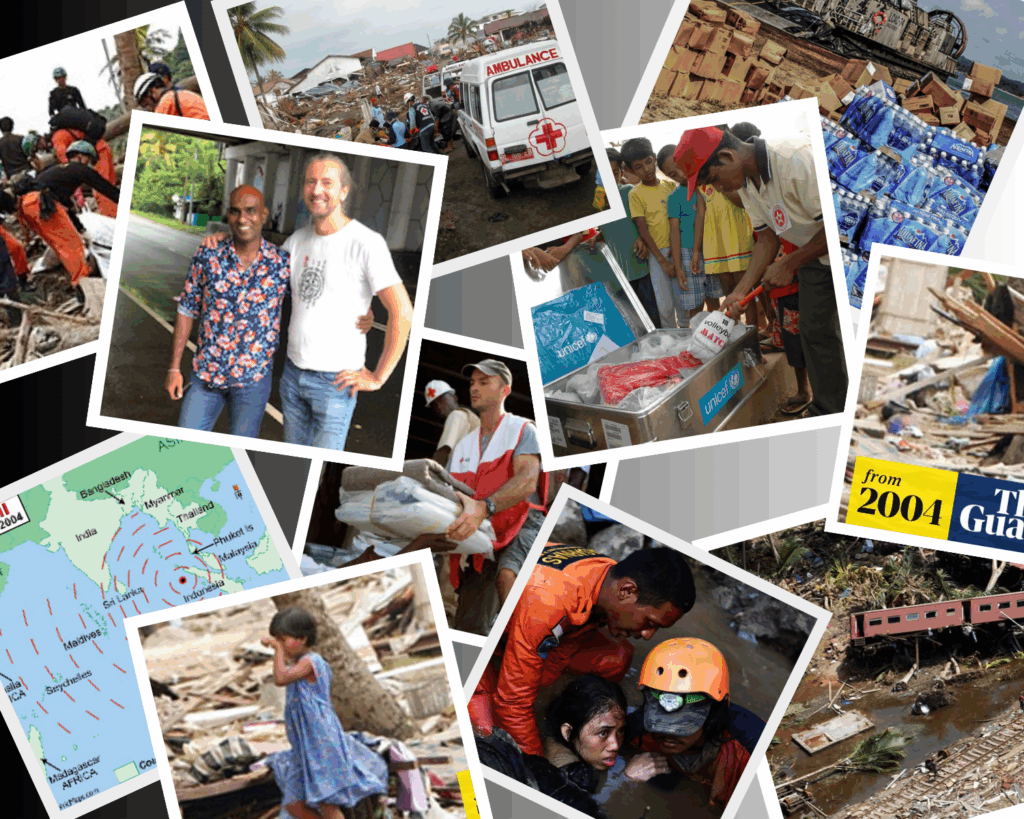
Sometimes, a single moment changes everything. In November 2004, we were making plans with a local partner in Sri Lanka for a production. Life was normal. A month later, on the night of December 27th, a message came through from him. The Tsunami had hit. The world we knew was gone, replaced by devastation and a desperate plea for help.
I was supposed to fly to the Caribbean for a holiday. I canceled it. There was no other choice. In a time before WhatsApp or instant group chats, I picked up the phone. I called our local partners, the people we’d worked with on films and events, people I knew I could trust. What happened next was a lesson in what’s possible when people decide to act.
In just four days, we organized the first cargo of aid. There were no committees, no long email chains. Just phone calls, day and night. The owners and CEOs of companies we worked with were on the phone with me in the middle of the night. Czech celebrities got involved. Even casino owners pitched in. We all worked together, driven by a single purpose. I was there at the airport in Prague, signing the documents myself, watching as the first aid was loaded onto a Czech Airline cargo plane to fly to Colombo. Our local partner was there to meet it, ready to distribute it directly to the hardest-hit children and families in the Galle region.
That first shipment arrived intact. But the reality of large-scale humanitarian aid quickly set in. It took nearly 24 hours to get the cargo through the offices in Colombo, while people were dying on the streets. With the shipments that followed in January and February, things started to go missing. The inventory we sent didn’t match what arrived. When we complained through our embassy, we were told this was a “common phenomenon.”
That was a turning point. It taught us a hard lesson: to truly help, you have to be direct and targeted. We shifted our strategy, focusing on sending medicine and equipment through a direct agreement with the director of the Red Cross. We had to bypass the systems that were broken.
The stories from the ground were horrific. A policeman sent photos from the city of Galle, describing the unimaginable sight of corpses, including children, floating in the streets. These are images our local partner still remembers to this day. But amid the horror, there was also a sense of purpose. All of us who helped, the partners, the donors, we all had the good feeling that we were part of something that worked. We had helped people, and we had done it fast.
It was a powerful example of how quickly aid can be delivered when the will is there.
But we also saw the darker side of human nature. We learned that a mobile hospital sent from a Czech hospital had “mysteriously disappeared” at the Colombo airport. We heard that major U.S. medical companies had sent expired drugs, creating a massive recycling problem. We saw opportunistic architects from Holland show up, proposing luxury villas to replace the simple homes that had been destroyed, trying to profit from the misfortune. The lost supplies, the people trying to get rich off of others’ suffering, it’s largely true.
Twenty years later, in 2024, I was back in Sri Lanka and had people from the Galle region personally thank me. It was a beautiful moment, but it was also clear that not much has changed. It is still a poor area that needs help, and the orphanages are in a terrible state.
That experience in 2004 is the bedrock of 1sign. It taught us that when human lives are at stake, you can move mountains in days. It proved that bureaucracy and indifference are choices, not inevitabilities. And it’s why we are so relentless in our fight for children today. The trafficking and abuse of children is a tsunami happening every single day. If we can act that fast for a natural disaster, we must demand the same urgency to fix the man-made ones. The laws have loopholes, but our will to act cannot.